The Hidden Dividend of AI: Giving Your People Their Time Back
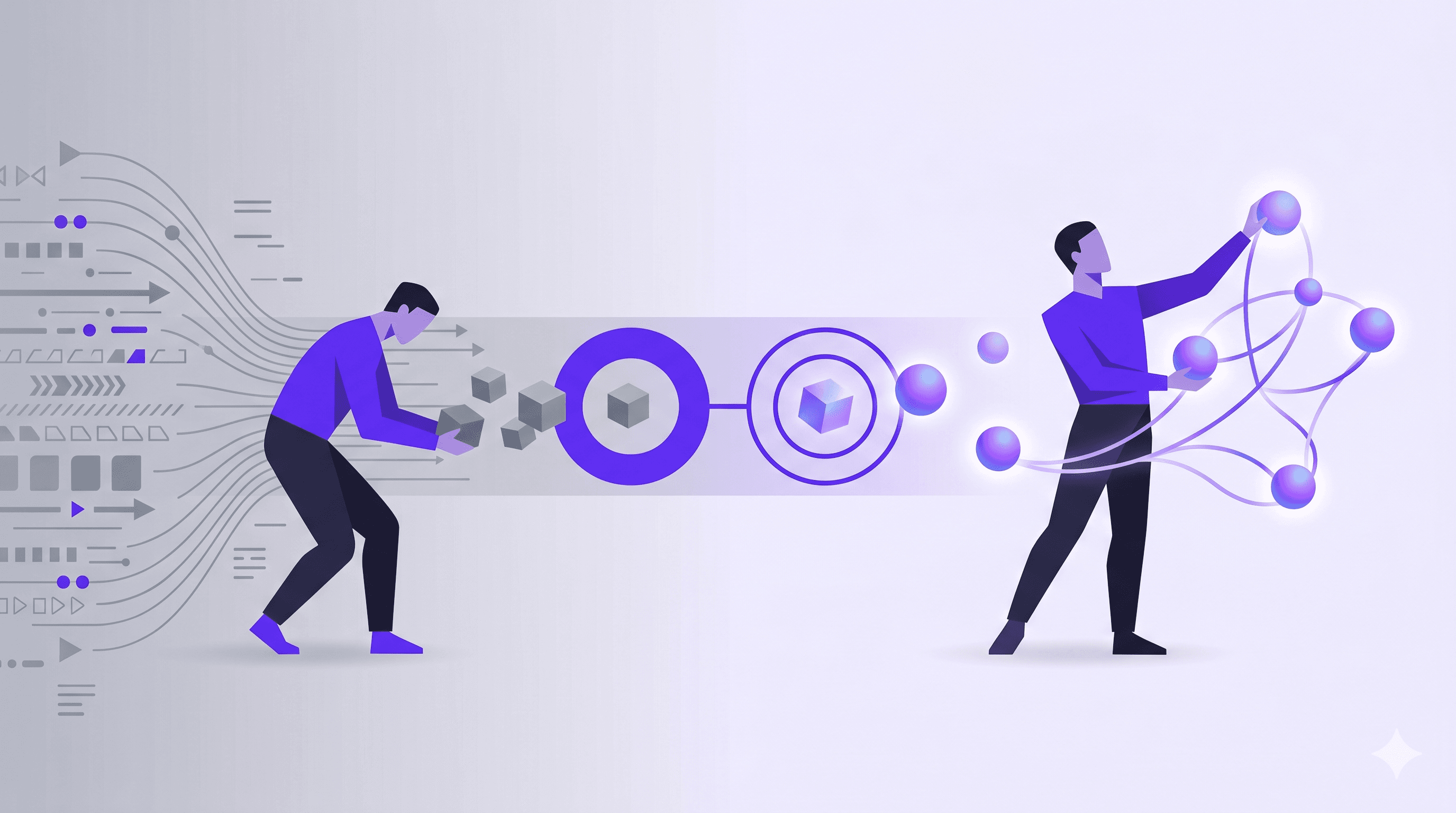
Most businesses focus on which AI tools to buy and how much they'll save. But the real question, what would your people do with their time if AI handled the boring stuff, is being left unanswered. The time dividend is real, but only valuable if you're deliberate about where it goes.
Key takeaway
AI's biggest contribution to your business isn't faster emails. It's giving your people the space to do work that only they can do. But that only happens if you automate the right things, train properly, and have a clear vision for where the recovered time goes.
There's a question that doesn't get asked nearly enough when businesses talk about AI.
Not "which tools should we buy?" Not "how much will we save?" But this: what would your people do with their time if they didn't have to do the boring stuff?
That's the real prize here — and most companies are leaving it on the table.
The opportunity cost nobody talks about
Every business has people doing work that doesn't necessarily need a human brain. Data entry. Chasing invoices. Reformatting reports. Pulling the same figures from the same spreadsheet every Monday morning. Responding to the same customer queries with the same answers, over and over.
None of that is inherently bad work. Some of these tasks build skills, contextual understanding of the business, and institutional memory — get your hands dirty, learn the fundamentals. But it's work that keeps good people stuck over time, and there's a cost to that. Not just in salary, but in what isn't happening while they're doing it.
Think about it practically. If a marketing coordinator spends 10 hours a week compiling campaign reports and updating a CRM, that's 10 hours they're not spending on creative strategy, building relationships with clients, or spotting patterns in the data that could open up a new revenue stream. The task gets done, sure, but the value that person could add? It evaporates over time.
That's the opportunity cost. And it's invisible until someone actually maps it out.
AI as the great time liberator
This is where AI, done properly, changes the equation.
When you deploy AI agents or automation against the right tasks — and I'll stress the right tasks, because not everything should be automated — you're not replacing people. You're giving them back the hours that were being consumed by repetitive, process-heavy work.
A sales team spending five hours a week per rep updating the CRM? An AI-powered transcription tool captures meeting notes, extracts action items, and updates customer records automatically. That's five hours freed. Multiply that across 20 reps and you've just unlocked 100 hours of human capacity per week. What does the team do with those hours? They sell. They build relationships. They think more deeply.
An operations manager manually reconciling data between three different systems? An agentic workflow handles the reconciliation, flags exceptions for human review, and produces a summary. The operations manager goes from firefighting data issues to actually improving operations — which, ironically, is supposed to be their job.
AI can take the repetitive cognitive load. Humans get redirected towards work that requires judgment, creativity, relationship-building, and strategic thinking — the stuff that actually moves a business forward.
But here's the catch
Simply freeing up time isn't enough. If you automate the mundane without investing in what comes next, you just end up with people who have spare capacity and no direction. Or worse, you end up with leadership seeing those freed-up hours as an excuse to cut headcount rather than redirect talent. That is not responsible — and both are mistakes.
The businesses that will genuinely benefit from AI are the ones that treat the time dividend as an investment opportunity, not a cost-saving exercise. Yes, there are efficiency gains. But the real value comes from what happens when you point skilled, capable people at higher-order problems they've never had the bandwidth to tackle.
That could mean a customer service team moving from reactive query handling to proactive relationship management. It could mean a finance team shifting from month-end reporting drudgery to genuine commercial analysis that informs strategy. It could mean a junior marketing executive, previously buried in scheduling and formatting, getting the space to develop a genuinely creative campaign.
Research from Stanford economist Erik Brynjolfsson backs this up. His work consistently shows that the set of tasks humans can perform when augmented by machines is significantly greater than either can handle alone. Augmentation is the rule. Full automation is the exception. And the value of human labour has actually increased over time as tools have become more powerful, not decreased.
The history of technology tells us the same thing. Sixty percent of people today work in occupations that didn't exist in 1940. The value didn't come from automating the production of existing goods. It came from people being freed up to create entirely new ones.
If we're being real, there will be people who were performing those repetitive task roles who may struggle to shift into more creative ones. What happens to them? This is something we'll explore in a future post, but a combination of patient re-skilling and internal re-organisation may see them develop a new career path and open up new opportunities. Whatever the solution, it should be respectful of the person's historic contribution and careful of their overall wellbeing.
Training is everything
AI training should become the new norm. And not the "here's a 30-minute webinar on ChatGPT" kind of training. Proper, structured AI literacy that helps people understand what these tools can and can't do. How to work with AI as a thinking partner. How to critically evaluate what it produces. How to spot when it's confidently wrong — because it will be, regularly.
That training needs to reach everyone, too — not just the technical staff. If your leadership team doesn't understand what AI means for their business model and competitive position, they'll either over-invest in the wrong things or block adoption out of fear. And if your frontline staff don't feel confident using the tools day-to-day — if they don't know what's safe to share with an AI tool and what isn't — then nothing changes at the operational level, no matter how good the technology is.
The businesses investing in this kind of capability building will be the ones that actually realise the AI dividend. The ones that just hand out subscriptions and hope for the best? They'll wonder why nothing changed.
Making it work in practice
None of this happens by accident. If you want AI to genuinely free your people up for higher-value work, you need to be intentional about it.
Start by mapping where time is actually being spent. Not where you think it's being spent, but where it actually goes. Talk to the people doing the work. They'll tell you exactly which tasks eat their week and which ones they'd love to hand off.
Then identify which of those tasks are suitable for AI. Not all of them will be. Some will need a human for good reason: judgment calls, sensitive decisions, relationship nuance. Be honest about that. AI isn't always the answer, and pretending it is will cost you trust and money.
For the tasks that are suitable, pilot before you scale. Have a plan for what people do with their freed-up time before you automate. Constantly review and iterate.
If this sounds like a lot to figure out on your own, that's because it is. This is exactly the kind of work I do with businesses at Futureformed — mapping where time is being lost, identifying which tasks are genuinely right for AI, building the training to make it stick, and making sure the human side of the equation doesn't get forgotten.
The bottom line
AI's biggest contribution to your business probably isn't going to be writing slightly better emails or summarising meeting notes. It's going to be giving your people the space and time to do the work that only they can do — the thinking, the creating, the connecting, the problem-solving that no algorithm can replicate.
But that only happens if you're deliberate about it. Automate the right things, train your people properly, and have a clear vision for where that recovered time goes.
The future of work isn't humans or AI. It's humans with AI — each doing what they're best at. The businesses that figure that out first will have a serious advantage.
The time dividend is there. The question is whether you'll spend it wisely.
This piece was written by Liam D. at Futureformed. If it sparked a thought, we’d be happy to continue the conversation.
Get in touchMore from the journal
Teach your AI that sometimes less is more.
Prompting Path: A Couch to 5K for AI
The AI Skill Gap Nobody Is Training For
You Are Never Going to Be Done Learning AI
You Don't Always Need the Biggest AI Model
How My Son and I Built a World Cup Tracker From Scratch
We Built a Mac App That Switches the AI Model Inside Claude Code and Codex
The AI Nightmares We Should Actually Be Having
We Built a Live Dashboard of Every AI Tool We Use, Here Is Why
Using Claude Cowork Efficiently in 2026
How We Built This: The Futureformed Website
AI Wattch: Seeing the Energy Cost of Your Prompts
The Hidden Cost of AI Agents
GreenPT: Sustainable AI That Doesn't Cost the Earth
AI Loyalty is Business Risk
Can't justify the compute? Give it the boot!
Breaking up from ChatGPT (it's not hard to do)
The Rise of the AI Orchestrator
AI Isn't a Tool. It's Your Next Operating System.
AI education is vital, but it doesn't need to be complicated
Shadow AI is already in your business. The question is what you do next.
AI isn't failing your business. Your change management is.
The first question I ask every client — and it's never about AI
AI transparency: First draft verbally dictated into Wispr Flow and edited and re-written by the author. A final spell-check was run in VS Code.